Concrete patio construction
Extend your outdoor living space with a durable concrete patio built to handle Cambridge winters and small urban lots.
Learn moreServing Cambridge, MA and surrounding areas. (617) 613-7966
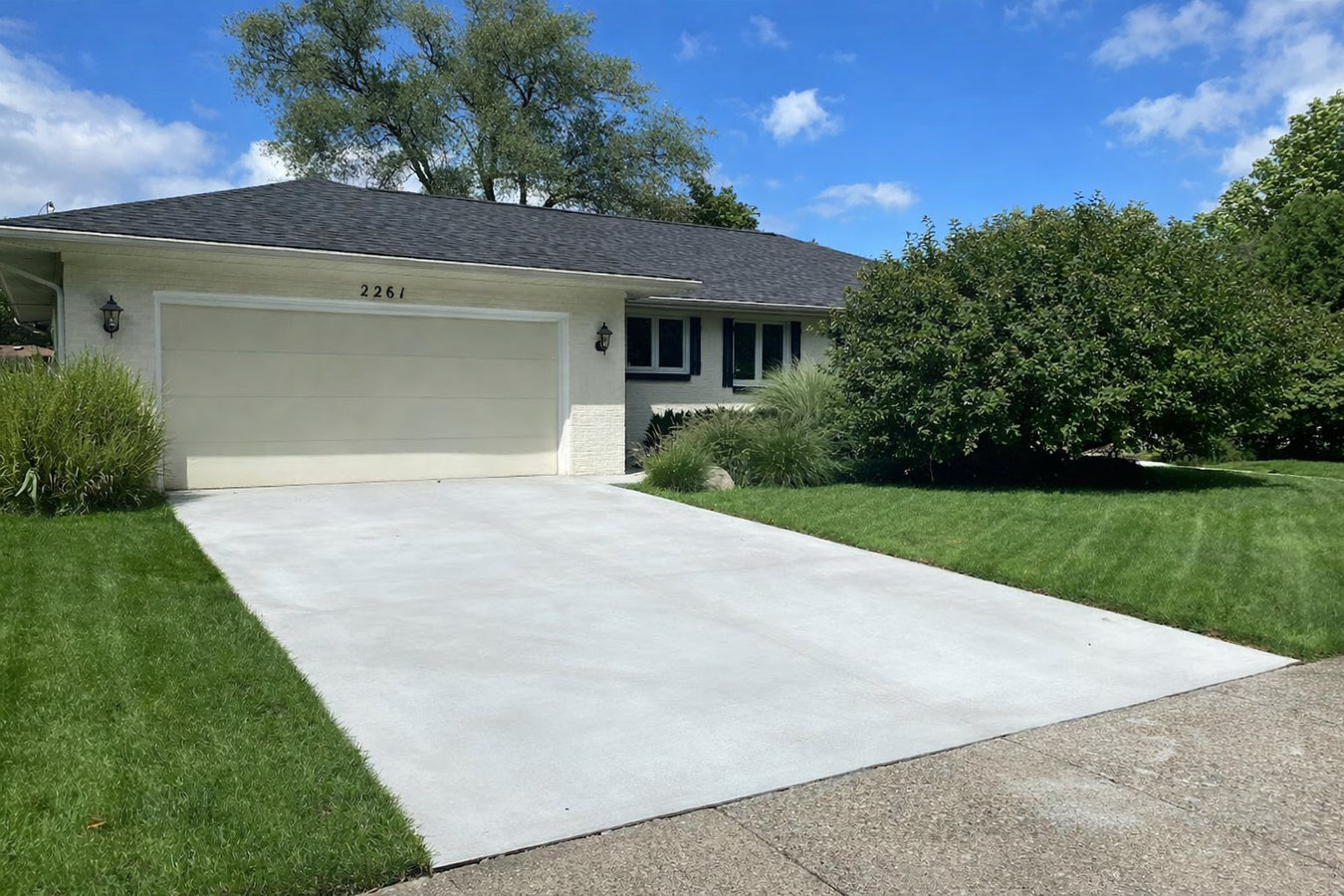
Cracked, flaking, or too narrow to use? We build concrete driveways that survive Cambridge winters, meet city permit requirements, and give you a reliable parking surface for decades.
Concrete driveway building in Cambridge, MA means removing your old surface, grading and compacting a proper gravel base, then pouring and finishing a new slab - most residential jobs take two to four days on-site plus one to two weeks for city permit processing.
Cambridge winters are among the most demanding environments for concrete in New England. Repeated freeze-thaw cycles, road salt, and clay-heavy soils mean the base preparation and concrete mix matter as much as the pour itself. A driveway built to the right spec here will last 30 years or more; one built to generic standards may start flaking within the first few winters.
Many Cambridge homeowners also need a concrete patio or concrete sidewalk at the same time - combining work into one mobilization saves time and often reduces total cost.
If the top layer of your driveway is peeling away in chunks or developing a rough, pitted texture after cold months, freeze-thaw damage is building up. Once this process starts it tends to accelerate each winter. Patching can buy time, but widespread flaking usually means the driveway needs replacement.
Hairline cracks are normal in aging concrete, but cracks wider than a quarter-inch - or sections that have shifted so one side sits higher than the other - mean the base underneath has failed. In Cambridge's older neighborhoods this often happens when tree roots grow under the slab or the original base was never compacted properly.
A properly built driveway slopes so water runs off to the sides or toward the street. Puddles sitting near your garage or house after rain mean the slab has settled unevenly or was never graded correctly. Standing water accelerates freeze-thaw damage and can eventually work toward your foundation.
Many Cambridge driveways were built a century ago for much narrower cars. If you are regularly scraping mirrors or avoiding the driveway because it is too tight, a rebuild is an opportunity to widen to something that actually works - within Cambridge's lot coverage rules.
Cambridge Concrete handles every type of concrete driveway project in the Cambridge area, from straightforward single-car replacements to wider two-car installations on constrained city lots. Every job starts with excavation of the old surface, proper gravel base compaction, and a concrete mix specified for Massachusetts freeze-thaw conditions.
Beyond a standard smooth finish, we offer brushed broom finishes for traction, stamped concrete patterns that mimic stone or brick, and exposed-aggregate options - each suited to different priorities and budgets. In Cambridge neighborhoods where properties sit close together and street presence matters, the finish choice is worth discussing during your estimate visit.
We also build matching concrete patios and concrete sidewalks that connect to your driveway for a complete, cohesive exterior surface.
Single or double-car driveway removal and pour with a broom finish - the most common project in Cambridge.
Decorative patterns that mimic stone, brick, or slate - suited to homes where curb appeal is a priority.
Expanding a narrow Cambridge driveway within city lot coverage rules to fit modern vehicles comfortably.
Cambridge sits in a climate zone where temperatures regularly swing above and below freezing throughout winter - sometimes multiple times in a single week. Each freeze-thaw cycle puts stress on concrete, and over years this is the single biggest reason driveways crack, flake, or heave. A contractor working here should be specifying concrete mixes and sealers designed for this kind of repeated stress.
The city also has older housing stock - neighborhoods like Cambridgeport, Mid-Cambridge, and The Port were built in the late 1800s and early 1900s, when lots were narrow and driveways were often shared or barely wide enough for one car. Replacing a driveway here often means working around fences, neighboring property lines, and mature trees with root systems that can complicate excavation. We know these streets and plan for these constraints before the crew shows up.
We regularly serve homeowners in Somerville, Boston, and Newton alongside our Cambridge customers. Cambridge also requires a permit for driveway construction - the city's Inspectional Services Department oversees this, and we handle the paperwork so you do not have to.
We will respond within 1 business day to get a few details - your address, driveway size, and whether you are replacing an existing surface. We schedule a site visit to see conditions in person before giving you a written quote.
We visit your property, take measurements, and review site constraints. Once you approve the written estimate, we pull the permit from Cambridge Inspectional Services on your behalf - you do not have to navigate city hall.
The crew removes the old surface and compacts a proper gravel base. This step determines how stable your driveway will be for decades. We do not rush it.
Concrete is poured, finished with your chosen surface texture, and left to cure. We walk through the finished project with you before we leave, covering care instructions and when to apply your first sealer.
We respond within 1 business day. There is no obligation - the estimate is free and based on a real site visit. After you submit, someone from our office will call to schedule a time to see your driveway in person and put together a written quote.
(617) 613-7966Cambridge Concrete holds Massachusetts contractor licensing and carries full liability insurance on every project. Your property is protected from the first day of work.
We handle the City of Cambridge permit process start to finish. The work is on record with Inspectional Services, which protects you at resale - no surprises for a buyer's attorney.
Every estimate is based on a real site visit, not a phone guess. We respond to new inquiries within one business day and schedule estimate visits promptly.
We specify concrete mixes and sealers suited for Massachusetts freeze-thaw cycles, not generic national specs. This is the single biggest factor in how long your driveway lasts in this climate.
Every one of these factors matters specifically in Cambridge. The permit process, the freeze-thaw climate, the tight lots, the older tree canopy - these are not abstract concerns. They are the actual conditions we navigate on every concrete driveway job in this city. The Portland Cement Association provides detailed standards for driveway construction that inform our installation approach.
Extend your outdoor living space with a durable concrete patio built to handle Cambridge winters and small urban lots.
Learn moreA matching concrete sidewalk alongside your new driveway improves both curb appeal and pedestrian safety.
Learn moreCall us today or submit a request - we respond within 1 business day and all estimates are free, written, and based on a real site visit.