Concrete retaining walls
Decorative and structural retaining walls that complement finished walkways and patios on Cambridge's sloped urban lots.
Learn moreServing Cambridge, MA and surrounding areas. (617) 613-7966
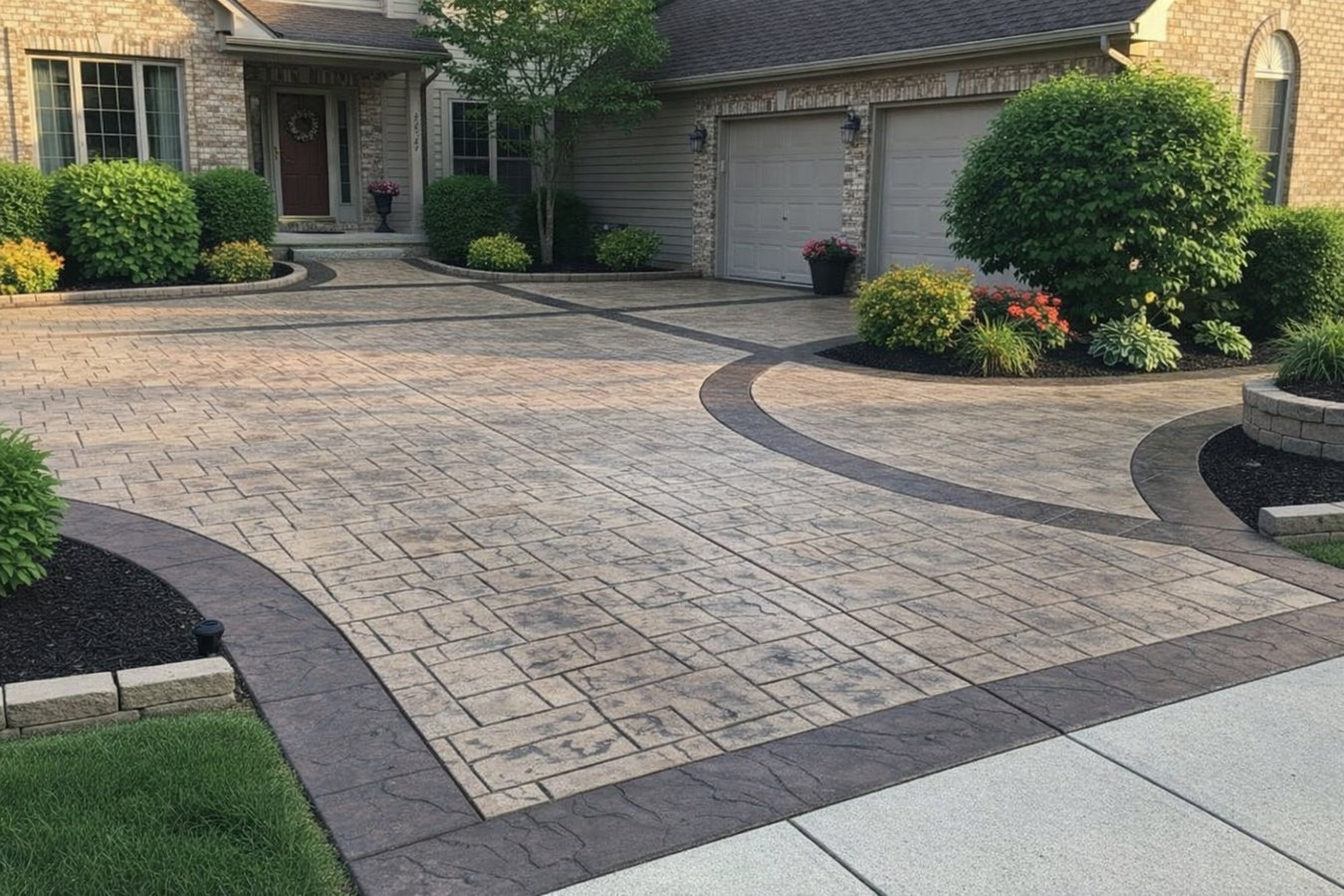
Plain gray concrete does not suit Cambridge's older homes. We install stamped, stained, and polished concrete surfaces sealed for New England winters, with free on-site estimates.
Decorative concrete in Cambridge, MA is regular concrete that has been stamped, stained, polished, or finished with exposed aggregate to look like stone, brick, wood, or tile - most residential projects take one to three days of active work plus a curing period before the surface is ready to use.
Cambridge's housing stock is dominated by pre-war homes: Victorian row houses in Cambridgeport, triple-deckers in East Cambridge, and Colonials throughout North Cambridge. Plain gray concrete looks out of place next to these buildings. Decorative concrete gives you a surface that matches the character of the home without the cost of natural stone, and when it is installed and sealed correctly it holds up through Cambridge winters just as well as a standard slab.
If you are deciding between decorative finishes for an outdoor surface, it is also worth comparing options with our stamped concrete services, which focus specifically on patterned pours for patios and driveways.
Cracks wider than a hairline, chunks missing from edges, or the surface peeling in layers are signs that freeze-thaw damage has compromised the concrete. In Cambridge, where winters are long and road salt is constant, surface deterioration tends to accelerate once it begins. Patching small areas is sometimes possible, but widespread damage usually means it is more cost-effective to replace and start fresh.
Cambridge has many beautifully maintained older homes where the concrete work looks like an afterthought. If your walkway or stoop is plain gray and crumbling at the edges, it undercuts an otherwise well-kept house. Decorative concrete can bring it in line with the character of your home without the cost of natural stone.
Standing water on a patio or walkway means the surface was not sloped correctly when poured, or it has settled unevenly over time. Beyond being inconvenient, pooling water speeds up freeze-thaw damage every winter. A new decorative concrete installation lets you correct the slope and the finish at the same time.
Unfinished concrete floors in Cambridge homes shed fine dust and absorb stains easily. A polished or stained decorative finish seals the surface, makes the space brighter and easier to maintain, and stops the dust. It is a practical upgrade that makes a real difference in how the space feels and functions.
Cambridge Concrete installs the full range of decorative concrete finishes for residential projects throughout the city. Stamped concrete presses patterns into the surface while it is still wet, mimicking stone, slate, or brick at a fraction of natural material costs. Stained concrete soaks color into the surface for a look that ranges from subtle earthy tones to rich, layered effects. Exposed aggregate reveals the small stones in the concrete mix for a textured, slip-resistant surface that works particularly well on walkways and pool surrounds.
For interior spaces, polished concrete is a practical and good-looking option for basement floors, utility rooms, and garage floors. It seals the surface against dust and staining, and in older Cambridge homes where original slab floors are bare and deteriorating, it transforms a neglected space without requiring full demolition. We also offer our full concrete retaining wall service for sloped lots, which can be finished decoratively to complement adjacent walkway and patio work.
Every decorative surface we install is sealed with a product suited to Cambridge's climate. The sealer is not optional here - it is what protects the finish against the freeze-thaw cycles and road salt that shorten the life of unsealed outdoor concrete in this region. We discuss the right sealer for your specific project and location during the estimate visit. For more information on decorative finishing options, the Concrete Network is a useful reference for comparing finish types.
Patterned surfaces for patios, walkways, and driveways - suited to homeowners who want a stone or brick look without the cost of natural material.
Color applied to existing or new slabs - suited to basements, patios, and covered outdoor spaces where a custom look matters.
Textured finish with stone visible on the surface - suited to walkways and pool surrounds where slip resistance is a priority.
Ground smooth and sealed - suited to interior floors in basements and garages where easy cleaning and dust control are the goal.
Cambridge averages more than 100 freeze-thaw cycles per year, and the city's streets are treated with road salt and chemical de-icers throughout winter. Both conditions are hard on outdoor concrete, and they are the main reason decorative surfaces that are not properly sealed begin to chip and fade within a few years in this climate. A contractor who does not seal decorative work for freeze-thaw and salt exposure in Cambridge is setting you up for a short-lived result. The MassDOT winter maintenance program documents the extent of de-icing use across the state - it is a genuine local concern, not a hypothetical one.
Cambridge's older housing stock also means many projects involve removing aging concrete before new decorative work can begin. Pre-war homes in neighborhoods like Cambridgeport, Mid-Cambridge, and Agassiz often have stoops, walkways, and basement floors that have never been replaced. Demolition and disposal are a real part of the project cost here, and a contractor who buries that cost or leaves it out of the initial quote is one to be cautious about. If your home is in one of Cambridge's historic districts, the Cambridge Historical Commission may review exterior changes - we flag this during the estimate when it applies.
We serve homeowners throughout Cambridge and work regularly in nearby Somerville, Newton, and Boston as well, where Cambridge's freeze-thaw conditions and dense urban lots are the same reality.
We respond within 1 business day. Most Cambridge contractors offer free on-site estimates that take 30 to 60 minutes - we measure the area, talk through design options, and give you a written quote before you decide anything.
Once you approve the design and price, we confirm whether a Cambridge permit is needed for your project. If it is, we handle the application with the city on your behalf - no paperwork for you.
The crew removes any existing concrete, grades the ground, and sets up forms. You need the area cleared of furniture and vehicles beforehand. Most Cambridge projects involve removing old material first, and disposal cost is included in your written estimate.
Concrete is poured and finished according to your design. After curing, we apply a protective sealer rated for Cambridge winters. We walk through the finished project with you and provide written care instructions before we leave.
Free on-site estimate - we visit your property, measure the space, and give you a written quote that breaks out every cost before you decide.
(617) 613-7966We know which Cambridge projects require a permit and which do not - and we handle the filing with the city's Inspectional Services Department when one is needed. If your home is in a historic district, the Cambridge Historical Commission may also need to review exterior changes, and we flag this during the estimate.
Every decorative surface we install is sealed with a product rated for Massachusetts freeze-thaw conditions and road salt exposure. This is not a generic upsell - it is the main thing that determines whether your new walkway or patio still looks right after five Cambridge winters.
Many Cambridge properties have no driveway, limited staging space, and neighbors within a few feet. We plan for these constraints before arriving, including when pump-truck delivery is necessary instead of a direct pour. A crew that has worked in Cambridge before does not underestimate the job.
We respond to new inquiries within one business day and schedule estimate visits promptly. Every quote is based on a site visit, not a phone guess, and breaks out demolition, labor, materials, and sealing so you can compare bids accurately.
Cambridge homeowners investing in decorative concrete want confidence that the work will hold up through this city's specific conditions - not just look good on the day it is installed. Cambridge Concrete brings local project experience, climate-appropriate materials, and transparent written estimates to every job. Call us to schedule a site visit and see what is possible for your property.
Decorative and structural retaining walls that complement finished walkways and patios on Cambridge's sloped urban lots.
Learn moreStamped concrete patterns - stone, slate, brick - applied to patios, driveways, and walkways for a premium finished look.
Learn moreSpring booking slots fill fast - reach out now to lock in your date before the busy season starts.