Concrete steps construction
Add or replace concrete steps connecting your pool deck to your home or yard for a finished, safe transition.
Learn moreServing Cambridge, MA and surrounding areas. (617) 613-7966
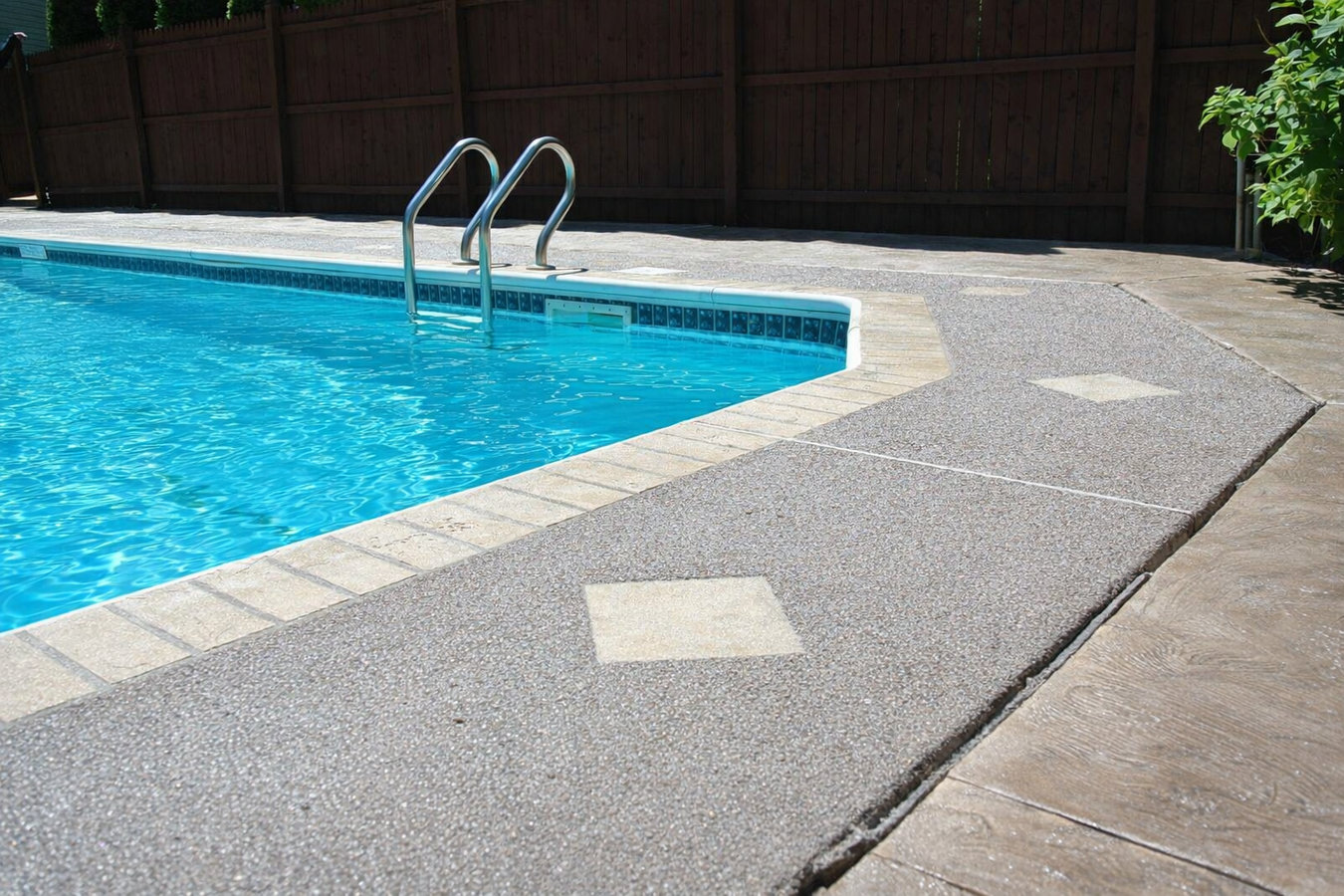
Cracked, uneven, or dangerously slick around your pool? We install concrete pool decks in Cambridge built for freeze-thaw winters, proper drainage, and bare feet.
Concrete pool decks in Cambridge, MA means forming, pouring, and finishing the surface surrounding your in-ground pool with proper slope for drainage and a textured finish for grip - most residential jobs take three to five days of active work plus permit processing time.
Cambridge homeowners face a specific challenge: more than 100 freeze-thaw cycles per year means any pool deck installed without the right concrete mix and a regular sealing schedule will show damage within a few winters. The work also involves real permit requirements - the City of Cambridge Inspectional Services Department oversees residential pool deck construction, and a reputable contractor handles that process for you before a single shovel breaks ground.
If your pool area needs entry steps or a connected outdoor living space, we handle concrete steps construction and concrete patio construction as part of the same mobilization, saving time and cost.
If hairline cracks you noticed last fall are now noticeably wider or longer after the winter, Cambridge's freeze-thaw cycles are actively breaking down the slab. Cracks wider than about a quarter-inch, or cracks running in a connected pattern across a section, mean the damage is progressing and will worsen each winter without intervention.
A properly installed pool deck slopes slightly away from the pool so water runs off rather than sitting on the surface. Puddles forming after rain or after kids splash out of the pool mean the surface has settled unevenly or was never graded correctly. Standing water accelerates surface wear and gives Cambridge freeze-thaw cycles more material to work with each winter.
When the top layer of a concrete deck starts to flake off in chips or develops a rough, pitted texture, the surface has been damaged by repeated freeze-thaw cycles, pool chemicals, or both. This is called spalling, and once it starts it tends to spread. A spalled surface is harder on bare feet, harder to clean, and exposes the interior concrete to faster deterioration.
If any part of your pool deck shifts when you step on it, or if you can feel a height difference between two sections, the slab has settled unevenly. In Cambridge, this often happens when soil has shifted over time or when tree roots from mature yard trees have grown underneath the deck. Uneven sections are a trip hazard and will continue to worsen if left unaddressed.
Cambridge Concrete handles pool deck projects from full new installations to resurfacing of slabs that are structurally sound but worn on top. Every new deck starts with grading the ground to ensure water drains away from the pool and the house, setting forms to define the finished shape, and pouring a concrete mix suited to Massachusetts winters. Texture is applied before the concrete sets - a broom finish for straightforward grip, or exposed aggregate and stamped patterns for homeowners who want something more distinctive.
When the deck as a whole is aging but not structurally failed, resurfacing applies a bonded overlay to the existing slab, refreshing the look and sealing the surface at a significantly lower cost than full replacement. A contractor should assess the slab honestly before recommending one approach over the other - if the base has shifted or the slab is cracked through, resurfacing is only a temporary fix.
We also build connected concrete steps for pool entry and access, and concrete patio construction that extends your outdoor space beyond the pool edge.
Full pour with drainage grading, texture finish, and permit filing - the right way to build a deck that lasts in Cambridge.
A bonded overlay over a structurally sound existing slab - suited to homeowners who want a fresh surface without full demolition cost.
Decorative pattern and color options for homeowners who want a deck that complements the style of their yard and home.
Cambridge averages more than 100 freeze-thaw cycles each year - temperatures that swing above and below freezing from late fall through early spring. Every one of those cycles pushes moisture deeper into an unsealed or poorly mixed concrete surface, gradually breaking it apart from the inside. A pool deck that was not installed with cold-climate concrete and sealed on a regular schedule will show cracking and spalling well before its expected lifespan. This is not a small detail; it is the most important design decision for any outdoor concrete in this city.
Cambridge is also one of the most densely developed cities in Massachusetts. Many residential lots have narrow side yards, fences, or neighboring structures that make getting equipment and materials to a backyard pool area genuinely difficult. Estimates that do not account for actual site access often come in lower but balloon once the crew arrives. We visit every property before quoting so the number you see reflects what the job actually requires.
We serve pool deck customers throughout the region, including homeowners in Somerville, Newton, and Boston, where many of the same frost, drainage, and access challenges apply.
We respond within 1 business day to get your address, pool size, and whether you have an existing deck to remove. We schedule a site visit before giving any firm price.
We measure the area, assess drainage and access conditions, and ask about finish preferences. Once you approve the written estimate, we file the Cambridge permit on your behalf - no city hall trips for you.
The crew removes any existing concrete, grades the ground for proper drainage, sets forms, and pours the new slab. The pour and finishing typically happen in a single day for most residential pool decks.
The deck is ready for light foot traffic in 24 to 48 hours and normal use within about a week. We schedule any required city inspection and walk through the finished project with you, covering care and sealing instructions.
Free on-site estimate. We handle the Cambridge permit. You hear back within 1 business day.
(617) 613-7966Cambridge Concrete holds Massachusetts contractor licensing and carries liability insurance on every project. Your property and your pool investment are protected from the first day of work.
We file the permit with the city's Inspectional Services Department before any work begins and schedule all required inspections. The finished work is on record with Cambridge, which protects you at resale.
Cambridge is one of the densest cities in Massachusetts, and we have completed pool deck projects on properties with narrow side yards, low fences, and limited equipment access. Your estimate reflects actual site conditions.
Cambridge averages more than 100 freeze-thaw cycles per year. We specify cold-climate concrete mixes and sealed finishes that handle this stress, not generic mixes designed for milder regions.
Pool deck work in Cambridge is not forgiving of shortcuts. The freeze-thaw conditions, the permitting requirements, and the tight access on many city lots all demand a contractor who has done this work here before. We have built pool decks across Cambridge and the surrounding communities and know what it takes to deliver a surface that holds up. The National Swimming Pool Foundation sets standards for pool deck safety that inform how we approach every project, including slip resistance and drainage requirements.
Add or replace concrete steps connecting your pool deck to your home or yard for a finished, safe transition.
Learn moreExtend your outdoor living area beyond the pool with a connected concrete patio built for Cambridge conditions.
Learn moreSpring booking slots fill fast - reach out now to lock in your start date before the season gets away from you.