Slab foundation building
If your entry steps are connected to your foundation, a slab foundation assessment ensures both surfaces are structurally sound.
Learn moreServing Cambridge, MA and surrounding areas. (617) 613-7966
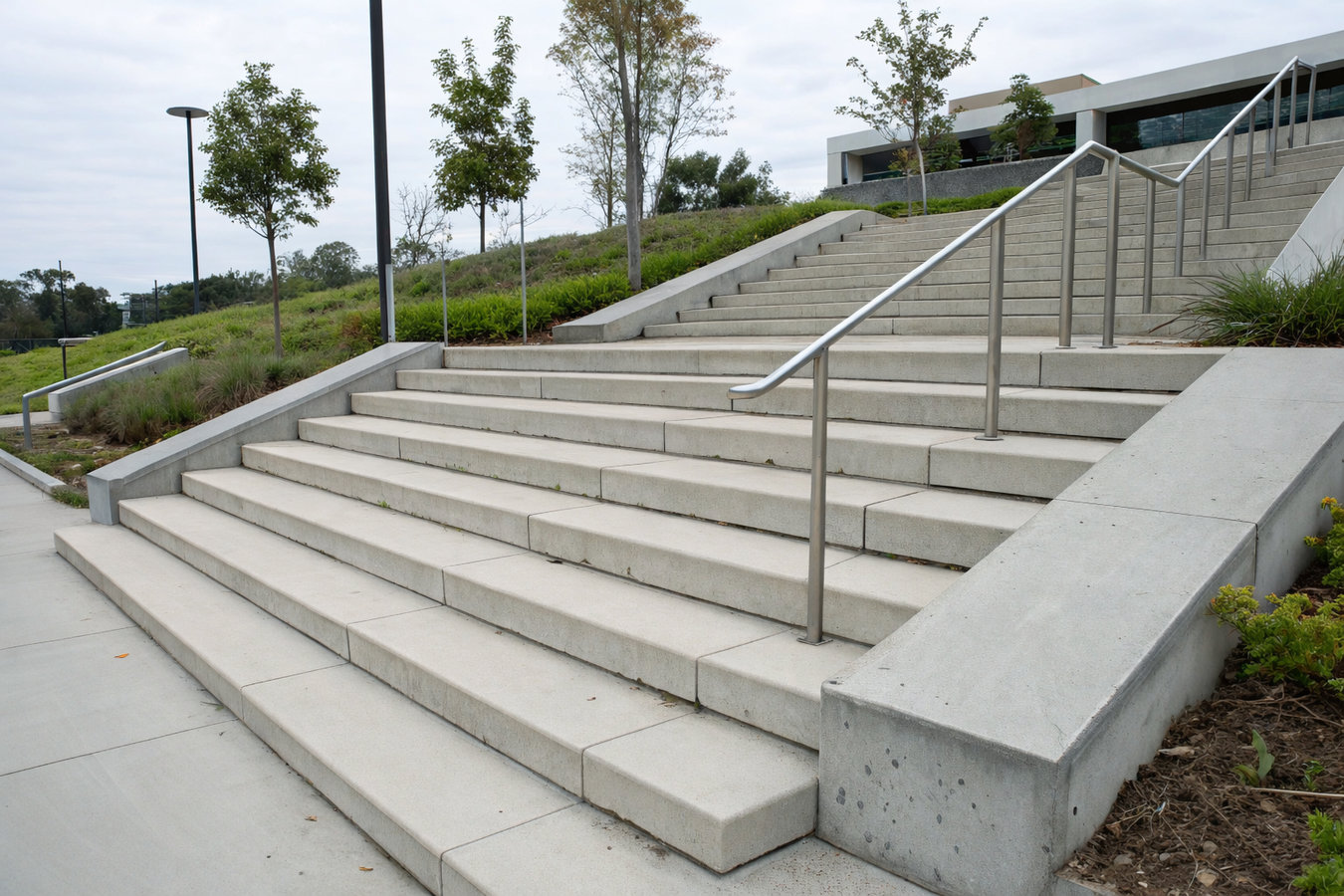
Crumbling, cracked, or shifting front steps? We build concrete entry steps in Cambridge designed to handle freeze-thaw winters, meet city permit requirements, and look right on older homes.
Concrete steps construction in Cambridge, MA means removing your old staircase, excavating and compacting a proper gravel base, setting forms, and pouring a new set of steps - most residential entry step projects take one to two days of active on-site work plus permit processing time.
Cambridge's housing stock is old - most homes in the city were built before 1940, many before 1900 - and entry steps on these properties are often attached to the foundation or masonry facade. Replacing them requires careful work to avoid disturbing the surrounding structure. Add Cambridge's intense freeze-thaw cycle to the equation and you have a job that rewards contractors with genuine local experience over those who apply a one-size-fits-all approach.
If your project involves a connected walkway or a concrete sidewalk, or if foundation concerns are part of the picture, we also handle slab foundation building and can assess both scopes together.
If you have filled cracks in your concrete steps more than once and they keep reappearing - especially after winter - the underlying structure has likely been compromised by Cambridge's repeated freeze-thaw cycles. Patching is a short-term fix; once the concrete has cracked through to the base or the steps have started to shift, replacement is the more cost-effective long-term answer.
If any step moves when you put your weight on it, or if the whole staircase has visibly tilted away from your home, the base has settled or eroded. This is a safety issue, not just a cosmetic one. A shifting step is a fall waiting to happen, especially in icy Cambridge winters when you are navigating them in boots.
Spalling - when the top layer of concrete breaks away in chips or flakes - is common in Cambridge due to years of de-icing chemicals combined with freeze-thaw stress. Once spalling is widespread, the surface becomes uneven and harder to clean, and the exposed interior concrete deteriorates faster.
If your steps have shifted so that the handrail no longer aligns correctly - or if there is a gap between the steps and your front door threshold - the structure has moved significantly. In Cambridge, many homes have original iron railings anchored into the concrete; a shifted staircase often means the anchor points are also compromised.
Cambridge Concrete builds new entry steps for front and rear entrances throughout Cambridge and the surrounding region. Every project starts with proper demolition of the failed existing staircase, excavation to stable ground, a compacted crushed-stone base, and - for most attached steps - steel reinforcing bar inside the forms before the pour. These are the steps that determine whether your new staircase is still solid five winters from now or starts cracking within the first season.
Finish options range from a standard broom texture - the most practical choice for grip in Cambridge's icy winters - to exposed aggregate and stamped patterns for homeowners who want something more refined. For Cambridge's older neighborhoods, a clean, well-proportioned finish that complements original brick, brownstone, or clapboard exteriors is often the best choice, and we discuss this during the estimate visit. We also build entry landings and concrete sidewalks that connect to the new steps.
For Cambridge properties in historic districts, we work within the design review requirements of the Cambridge Historical Commission. We also build slab foundations when the project scope involves more than just the steps themselves.
Full demolition and pour with a broom finish and compacted base - the most common project on Cambridge's older residential homes.
A wider landing at the top or bottom of the staircase, suited to homes where entry access or door clearance requires more surface area.
Stamped patterns or exposed aggregate for homeowners who want new steps that complement a historically appropriate or updated exterior.
Cambridge goes through more than 100 freeze-thaw cycles per year. Water that gets into a small crack or pore in concrete freezes, expands, and slowly widens that crack each cycle. Entry steps in this city need to be built with air-entrained concrete - a mix specifically designed to handle this mechanical stress - and on a properly compacted base that does not shift when the ground heaves in winter. A contractor unfamiliar with Massachusetts cold-weather standards will use whatever mix is on hand, and you will be replacing the steps again in a few years.
The majority of Cambridge's homes were built before 1940. Neighborhoods like Cambridgeport, Mid-Cambridge, and East Cambridge are full of Victorian row houses, triple-deckers, and older masonry buildings where the entry steps are structurally connected to the building's facade. Removing and replacing those steps requires a contractor who knows how to work carefully around older construction without causing damage to the surrounding structure. Getting equipment down narrow Cambridge side streets and working around low fences and adjacent properties is part of every job here.
We serve homeowners across the region, including Somerville, Boston, and Quincy, where older housing stock and tight urban lots create the same demands as Cambridge.
We ask for photos and your address before scheduling a visit so we can understand the scope in advance. The in-person estimate typically takes 20 to 30 minutes and results in a written quote that breaks out labor, materials, and permit fees separately. We respond within 1 business day.
For most attached concrete steps in Cambridge, we file a permit application with the Inspectional Services Department before any work begins. This typically takes a few days to a couple of weeks. We handle the process entirely - you do not need to visit any office.
The crew removes your old steps, excavates the area, compacts a gravel base, and sets the forms that give the new steps their shape. This prep work is where the durability of the finished project is determined. We do not rush it.
Concrete is poured, leveled, and finished with your chosen surface texture - all in one day for most Cambridge entry step projects. The steps are safe for careful foot traffic the next morning. We schedule the city inspection and walk you through care instructions before we close out the job.
Free written estimate. Cambridge permit handled for you. We reply within 1 business day.
(617) 613-7966Cambridge Concrete holds Massachusetts Home Improvement Contractor registration and carries full liability coverage. If anything goes wrong on your property during the project, you are not personally on the hook.
We pull the permit from Cambridge Inspectional Services and schedule the required inspection after the work is complete. The finished steps are on record with the city, which protects you at resale and gives you documentation that the work was built to code.
More than half of Cambridge's housing was built before 1940. We regularly work on Victorian row houses, triple-deckers, and Italianate facades in Cambridgeport, Mid-Cambridge, and East Cambridge - homes where the scale and character of new steps matters as much as the structural quality.
We specify air-entrained concrete designed for Massachusetts climate conditions, not generic mixes. Combined with a compacted gravel base and a sealed surface, this is the single biggest factor in whether your steps are still looking solid five winters from now.
Entry steps on a Cambridge home are not a minor project. They connect directly to your foundation or facade, they are the first thing every visitor uses, and they have to handle Cambridge's winters without patching every spring. We build to the American Concrete Institute standards for cold-climate concrete placement and work in compliance with Cambridge Inspectional Services requirements on every job.
If your entry steps are connected to your foundation, a slab foundation assessment ensures both surfaces are structurally sound.
Learn moreConnect your new entry steps to a matching concrete sidewalk for a cohesive, safe path from street to door.
Learn moreSpring booking fills fast in Cambridge - contact us now to lock in your installation date before the season is gone.