Concrete parking lot building
Commercial-grade concrete flatwork for parking surfaces on the same property as your foundation project.
Learn moreServing Cambridge, MA and surrounding areas. (617) 613-7966
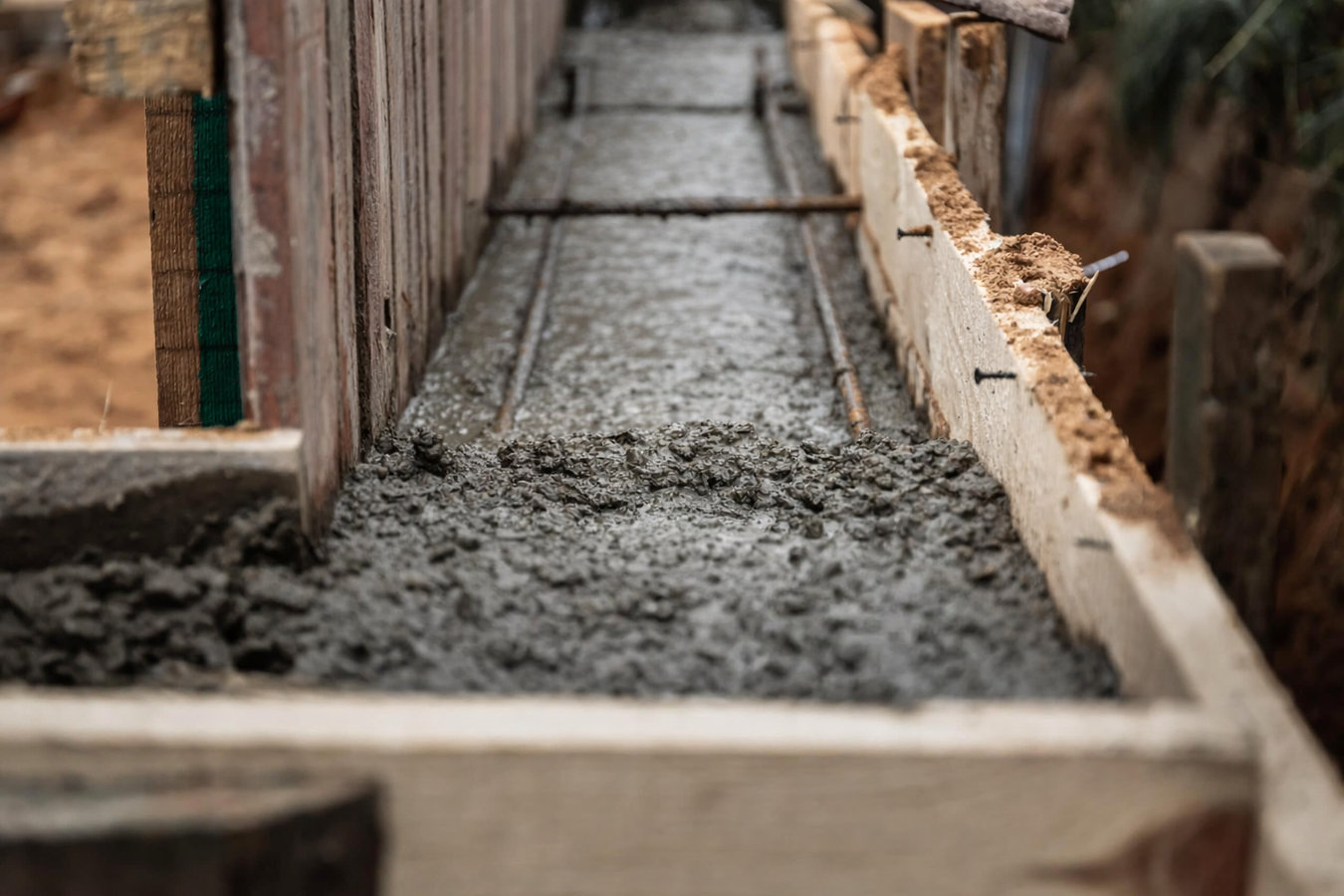
Replacing an aging foundation or starting new construction? We install residential foundations on Cambridge's dense urban lots and older homes - permits handled, soil assessed, waterproofing included.
Foundation installation in Cambridge, MA covers excavation, concrete forming, pouring, waterproofing, and city-inspected permit closeout for basement, crawl-space, or slab foundations - most residential projects take one to two weeks of on-site work, plus four to six weeks of permit lead time before excavation can begin.
Cambridge presents specific challenges for foundation work: the city's ground freezes deeply in winter, more than half of its housing stock was built before 1940, and many lots sit on glacial till or fill material that can shift under load over time. A contractor who has not worked extensively in Cambridge's neighborhoods will encounter soil conditions, permitting timelines, and access constraints they did not plan for.
Foundation installation often connects to other structural concrete work. If your project involves an attached structure or a new floor surface, you may also need slab foundation building for a garage or addition, or concrete parking lot building if your site includes a commercial or multi-unit parking surface.
If doors or windows have started jamming, sticking, or sitting crooked in their frames, the structure may be shifting - and that often starts at the foundation. Pay particular attention if the problem has appeared gradually over a season or two. In Cambridge's older housing stock, this kind of slow drift is one of the earliest and most reliable warning signs of foundation movement.
Hairline cracks in concrete are common. Cracks wider than a credit card, diagonal cracks running from corners, or cracks that are growing over time deserve a professional evaluation. Horizontal cracks in basement walls are especially concerning - they can indicate soil pressure from outside is pushing the wall inward. Cracks that appear or worsen each spring after a hard Cambridge winter are worth investigating promptly.
Puddles, damp walls, or a persistent musty smell in your basement after heavy rain or spring snowmelt means water is finding a way through or around your foundation. Cambridge's clay-heavy soils in some neighborhoods hold water longer than sandy soils, increasing pressure on foundation walls. Even small recurring moisture will weaken concrete over time and lead to larger structural problems.
Many Cambridge homes still rest on their original foundations - some brick, some rubble stone, some early poured concrete not designed for modern loads. If you have been told your foundation is original to a pre-World War II home, or if you can see crumbling mortar between stones in your basement, a structural engineer or experienced contractor should take a look. These foundations were not built to last indefinitely.
Cambridge Concrete installs full basement foundations, crawl-space foundations, and slab foundations for residential properties across Cambridge and the greater Boston area. Every project includes a thorough site assessment before work begins - soil conditions, equipment access, proximity to neighboring structures, and the existing foundation if the project involves a replacement. For older Cambridge homes, this stage may also involve coordinating with a structural engineer to confirm the design before excavation starts.
For homeowners whose projects extend beyond the foundation itself, we offer slab foundation building for attached structures and outbuildings, and concrete parking lot building for multi-unit or commercial surfaces. Combining work on one mobilization reduces total cost and limits disruption to your property and your neighbors.
Every Cambridge foundation project we take on is fully permitted. The Cambridge Inspectional Services Department requires a building permit for all foundation work, and we manage the application, the staged inspections, and the final closeout documentation on your behalf. Waterproofing is included on every project, not offered as an add-on.
Excavated, formed, and poured concrete foundations with full basement height for new construction or replacement under standing homes.
Shallow foundations suited to Cambridge properties where a full basement is not needed but a proper structural base and moisture barrier are.
Underpinning or full replacement for pre-1940 Cambridge homes sitting on original brick, stone, or deteriorated early concrete foundations.
Cambridge's housing stock presents a set of foundation challenges that contractors working elsewhere rarely encounter. More than half of the city's housing units were built before 1940, and many still rest on their original foundations - brick, rubble stone, and early poured concrete that was never designed for modern loads or current code requirements. Replacing these foundations under standing homes requires careful temporary shoring, staged excavation, and experience working on buildings that cannot flex the way new construction can. The Cambridge Historical Commission may also require review for properties in or near designated historic districts, adding a step to the permitting timeline that out-of-area contractors frequently overlook.
Soil conditions vary significantly across the city. Areas closer to the Charles River and Alewife Brook - including parts of Cambridgeport, Area 4, and North Cambridge - sit on softer, wetter soils that drain slowly and shift with moisture changes. These soils may require additional stabilization or engineering before a foundation can be safely installed. A contractor who treats every Cambridge lot the same will miss problems that show up months after the project is complete.
We work across the Cambridge area and into the surrounding region, including Somerville and Boston - cities with similar old housing stock, dense urban lots, and permitting processes that reward contractors who already know the local offices and requirements. Homeowners in Quincy and Newton call us for the same reason Cambridge homeowners do: local knowledge reduces surprises.
We respond within 1 business day. Foundation work is too site-specific to price over the phone - we visit your property, assess the soil, access, and existing foundation if applicable, then provide a written estimate. The visit takes 30 to 60 minutes.
We submit the permit application to Cambridge's Inspectional Services Department on your behalf. For older homes, this stage may involve coordinating with a structural engineer. Plan for four to six weeks of permit lead time, especially for historically significant properties.
The crew arrives with excavation equipment - this is the loudest phase, typically one to three days. After excavation, forms are set, reinforcing steel is placed, and concrete is poured. A city inspector visits at key stages before the work is covered up.
Once concrete has cured, we apply waterproofing to the outside of the foundation walls and install drainage components. Soil is backfilled and graded so water moves away from the house. The city inspector returns for final sign-off and you receive permit documentation for your home file.
Every Cambridge site is different. We visit your property in person, assess soil conditions, access constraints, and your existing foundation if applicable, and give you a written estimate you can compare with confidence. No obligation.
(617) 613-7966Cambridge winters put repeated freeze-thaw stress on every foundation in the city. We use concrete mixes and installation techniques designed for New England conditions, and we protect fresh pours during cold-weather curing - not as an add-on but as standard practice.
We handle the Cambridge Inspectional Services Department process through every required inspection stage. Your project is documented, approved, and on record before any excavation equipment arrives on your property.
A large share of Cambridge homes sit on foundations that predate modern building codes. Replacing or underpinning a foundation under a standing century-old home requires a different level of planning and care than new construction. We have done this work on Cambridge's older housing stock since 2022.
In Cambridge, your foundation work often happens just feet from an adjacent home. We plan every project with neighboring foundations in mind - using the right equipment, sequencing, and precautions so you are not dealing with complaints or liability when the job is done.
Massachusetts requires contractors on residential structural projects to hold a Home Improvement Contractor registration and a Construction Supervisor License. These credentials are verifiable through the state's online lookup, and you should check them before hiring any contractor for foundation work. Every project we take on in Cambridge is licensed, permitted, and inspected - because your foundation is the one part of your home that cannot be easily revisited once it is built.
Commercial-grade concrete flatwork for parking surfaces on the same property as your foundation project.
Learn moreSlab-on-grade concrete foundations for additions, garages, and new structures on Cambridge lots.
Learn moreCambridge permit lead times run four to six weeks - the sooner you reach out, the sooner your project gets on the calendar and the more control you have over your timeline and cost.