
Foundation raising
Lifting an existing Cambridge home to install or repair the foundation sitting beneath it.
Learn moreServing Cambridge, MA and surrounding areas. (617) 613-7966
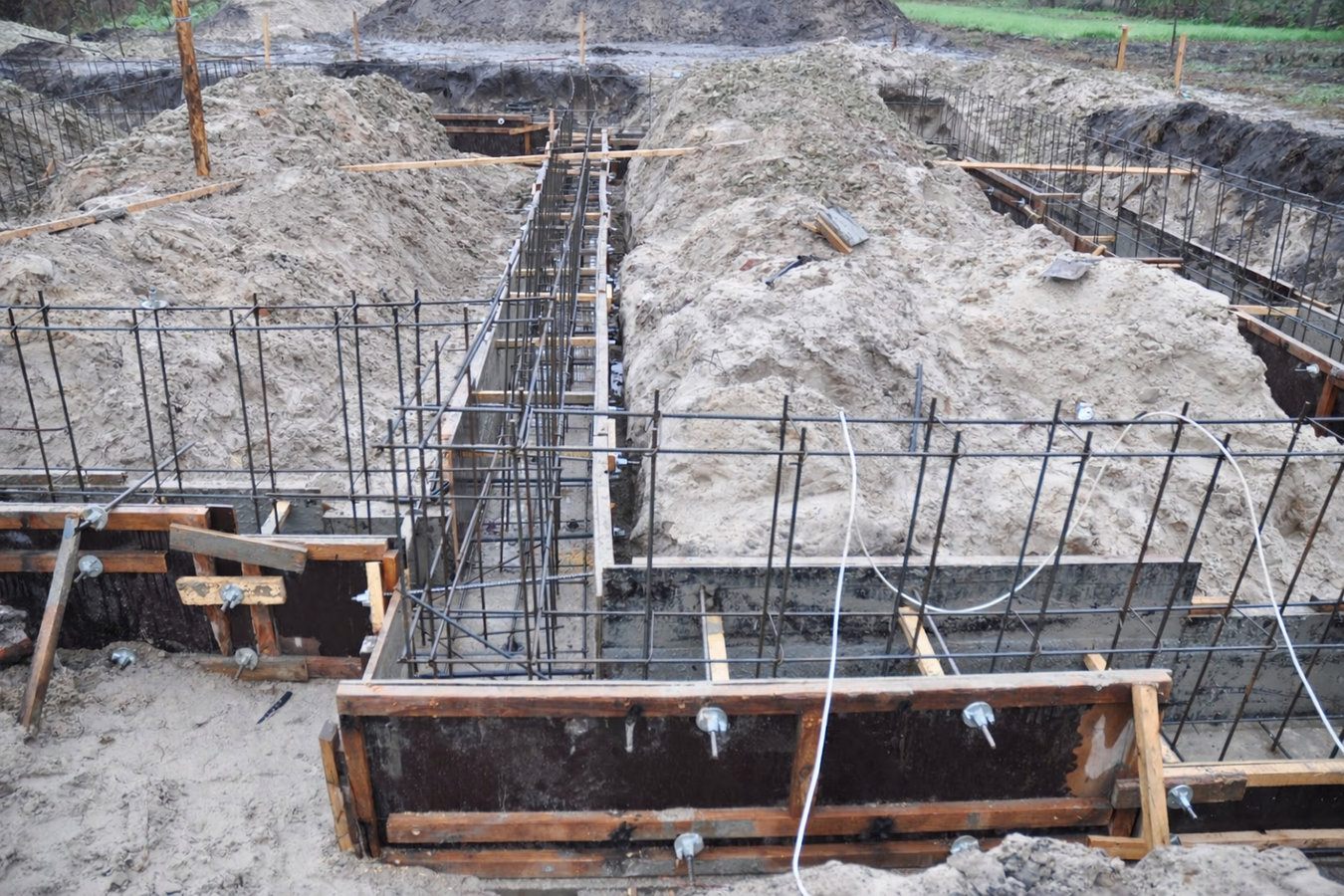
Adding on to a Cambridge home? We pour concrete footings to the full 48-inch frost depth, manage every permit through the city, and call Dig Safe before any excavation begins.
Concrete footings in Cambridge, MA are the underground concrete bases that hold up structures - additions, decks, garages, and retaining walls - by spreading their load across stable soil below the 48-inch frost line; most residential footing projects take one to three days of on-site work plus one to three weeks of permit lead time before digging can begin.
The frost depth requirement is not a formality. Cambridge winters freeze the ground deeply, and any footing placed above that line will move up and down each year until the structure above it cracks, shifts, or pulls away from the building it is attached to. Cambridge's older housing stock adds a second layer of complexity: homes built before 1940 were often built with footings shallower or narrower than today's standards, and a planned addition will expose that gap when the permit is pulled.
Footing work frequently connects to broader foundation projects. If your project involves raising the house to access the foundation below, our foundation raising service handles that scope. For full foundation installation - basement, crawl space, or slab - see our foundation installation page for how those two types of work relate.
When a footing shifts or settles, the structure above moves too - even slightly. That movement often shows up first as doors or windows that stick, will not latch, or have gaps at the corners they did not have before. If this is happening in multiple spots, it is worth having a contractor look at what is going on below grade.
Diagonal cracks in plaster or drywall - especially ones that radiate from corners of doors or windows - are a classic sign of foundation or footing movement. In Cambridge's older homes, where plaster walls are common, these cracks can appear after a hard winter when freeze-thaw cycles have stressed an already shallow footing. A crack that reappears after you patch it is a stronger warning sign than one that stays put.
Any new structure attached to your home needs footings that meet current Cambridge building requirements. If you are planning a project and have not yet discussed what goes underground, that conversation needs to happen before design gets too far along. Getting the footing right from the start is far cheaper than correcting a problem after the structure is built.
Water finding its way in through the base of a foundation wall often points to a footing that has cracked or shifted enough to let moisture through. This is especially common in homes near Cambridge's Charles River lowlands or in neighborhoods with older combined sewer systems that back up during storms. Water in the basement is not always a footing problem, but it is a reason to have someone look.
Cambridge Concrete installs concrete footings for residential additions, decks, garages, and freestanding structures across Cambridge and surrounding communities. Every project starts with a site visit - we assess soil conditions, available equipment access, proximity to underground utilities, and the existing foundation if the project involves an older Cambridge home. You receive a written estimate that specifies depth, dimensions, rebar placement, and cleanup scope before we commit to anything.
When your project requires work above and below grade, we can coordinate footings with the structure that sits on top of them. If your addition also involves raising the existing structure, our foundation raising service handles that scope on the same mobilization. If you need a complete new foundation rather than individual footings, our foundation installation service covers basement, crawl-space, and slab foundations with full permit management and waterproofing.
The American Concrete Institute sets the technical standards for structural concrete including footings, and we work to those standards on every pour. Rebar placement, concrete mix selection, and curing time are specified in writing before work starts - not decided informally on pour day. Every Cambridge footing project is fully permitted; we handle the application, inspector coordination, and permit closeout documentation through Cambridge Inspectional Services on your behalf.
Best for additions, detached garages, and new structures that need a code-compliant base from the ground up.
Best for older Cambridge homes where existing footings are too shallow for a planned addition or renovation permit.
Best for freestanding decks, sheds, and accessory structures that require permitted concrete bases on Cambridge lots.
Cambridge's 48-inch frost depth is the baseline, but local soil conditions make the job more involved than depth alone. Much of Cambridge sits on a combination of glacial till and fill material placed over centuries of urban development. Fill soil can be loose, uneven, or contain buried debris - none of which makes a reliable base for a footing. A contractor experienced in Cambridge probes or tests the soil before finalizing footing dimensions rather than assuming the ground is uniform across the entire site.
Urban lot density creates a second set of challenges. Cambridge properties sit close together, which means getting excavation equipment into a backyard often requires navigating narrow side yards and mature trees. Underground utility lines - gas, electric, water, and sewer - are more densely packed here than in suburban areas, and in an older city like Cambridge they are sometimes incompletely documented. The Dig Safe utility-marking service is required by Massachusetts law before any excavation and is a non-negotiable step on every project we take on.
We work on footing projects throughout Cambridge and the surrounding region. Homeowners in Somerville face similar pre-1940 housing conditions and frost-depth requirements. In Newton, footing projects on larger lots still run into clay-heavy soils that need careful assessment before dimensions are finalized. And in Worcester, the frost depth and permitting requirements are close enough to Cambridge's that our experience transfers directly.
We respond within 1 business day. Most Cambridge footing jobs require an in-person visit before a real number can be given - we assess access, soil conditions, and what the structure above requires. You receive a written estimate specifying depth, dimensions, and scope.
We submit the permit application to Cambridge's Inspectional Services Department on your behalf - typically a one-to-three-week wait. We also contact Dig Safe so underground utility lines are marked on your property at least three business days before any digging starts.
The crew digs to the required 48-inch frost depth, sets up forms, places steel reinforcement inside, and pours the concrete. A city inspector may visit before or during the pour - this is normal and expected. The work typically takes one to two days on site.
After curing - at least a week before any load, up to 28 days for full strength - we backfill the excavation and restore the ground surface as agreed. The city inspector returns for final sign-off, and you receive a copy of the closed permit for your records.
Permit season books quickly in spring - call or submit the form and we will respond within 1 business day with next steps.
(617) 613-7966Cambridge's frost line runs to roughly 48 inches - one of the deepest in the region. Every footing we install is dug to that depth or below, not estimated or shortened to save time. A footing above the frost line will move with every Cambridge winter until whatever it supports is damaged.
Cambridge lots pack gas, electric, water, and sewer lines into tight underground corridors that are old and sometimes incompletely documented. We call Dig Safe on every footing project - no exceptions. A missed utility line during excavation creates dangerous conditions and costs far more than the call itself.
A large share of Cambridge homes sit on footings that predate modern building codes. We assess what is already there before recommending anything new and can explain the difference between a footing that needs extending and one that needs full replacement - in plain language, without unnecessary upselling.
We handle the Cambridge Inspectional Services Department permit from application through final inspector sign-off, and we provide you with documentation at closeout. That paper trail matters when you refinance, sell, or need to prove permitted work to an insurer.
Footing work in Cambridge is not complicated - but it requires a contractor who takes the frost depth, soil variability, utility density, and city permit process seriously before any excavation equipment arrives. We have handled these specifics on Cambridge properties since 2022, and the project scope, depth specification, and cleanup terms are in writing before we start.
Lifting an existing Cambridge home to install or repair the foundation sitting beneath it.
Learn moreFull residential foundation installation for new construction or replacement under a standing Cambridge home.
Learn moreSpring permit slots fill up fast - reach out now so we can assess your site and get you on the schedule before the season books up.