Foundation installation
Full basement and crawl-space foundation work for homes that need more than a slab.
Learn moreServing Cambridge, MA and surrounding areas. (617) 613-7966
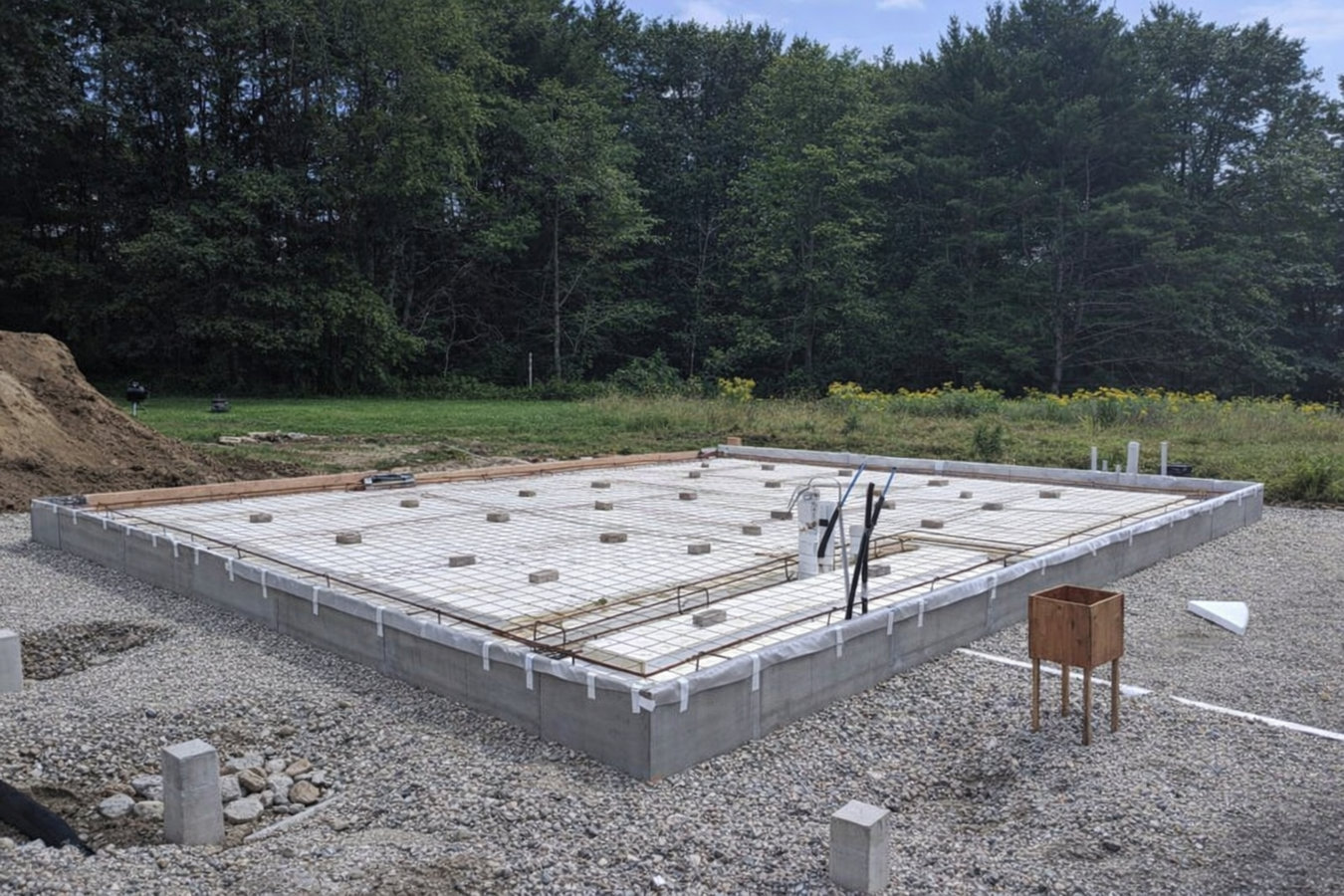
Planning an addition, garage, or new structure? We build concrete slab foundations with frost-depth footings, moisture barriers, and full Cambridge permit filing on every project.
Slab foundation building in Cambridge, MA places a reinforced concrete pad directly on prepared ground, serving as both the floor and structural base - most residential projects take one to two weeks on-site from site preparation through the cured slab, plus permit approval time beforehand.
Cambridge's ground freezes to a depth of several feet each winter, which means slab foundations here require footings that go well below the frost line. Without proper frost footings, the slab will heave, crack, and settle unevenly as the seasons cycle. The city also sits on a mix of fill material and older disturbed soil in many neighborhoods, making the gravel base and soil assessment stages of the work critical, not optional.
Many slab projects connect to broader structural work. If you are building an addition, you may also need foundation installation for a full basement, or concrete footings for posts and structural supports that tie into the slab.
Planning a garage, accessory dwelling unit, or home addition in Cambridge? You almost certainly need a permitted slab or foundation beneath it. Even small additions require a proper foundation under Cambridge's building code - a structure sitting on bare ground or temporary supports will not pass inspection.
Hairline cracks in concrete are common and usually cosmetic, but cracks wide enough to fit a pencil tip into - or cracks that appear to be growing over time - signal that the slab is moving or settling. On Cambridge properties that sit on older fill soil, this kind of movement is not unusual and is worth having evaluated promptly before it worsens.
If water collects on your concrete floor or along the edges of a slab after rain, the drainage slope may be wrong or the slab may have shifted. Cambridge's significant annual rainfall means a slab that traps water rather than shedding it will deteriorate faster and can push moisture into adjacent walls or structures above.
Finishing a basement, converting a garage, or enclosing a porch may require a new slab as part of bringing the space up to code. Cambridge's Inspectional Services Department requires floors in converted living spaces to meet current standards before issuing a certificate of occupancy.
Cambridge Concrete builds residential slab foundations for new structures, additions, garage floors, and space conversions across Cambridge and the surrounding area. Every project starts with a site assessment during the estimate visit to check soil conditions, existing grade, and access for concrete trucks or pump equipment. We plan for Cambridge's tight lots before the crew shows up, not on the day of the pour.
For homeowners whose projects extend beyond a single slab, we offer foundation installation for full basement and crawl-space foundations, and concrete footings for standalone structural supports. Combining work on one mobilization reduces total cost and limits disruption to your property.
Every Cambridge slab project we take on is permitted through the Cambridge Inspectional Services Department before any concrete is poured. The permit process includes a city inspection of the preparation - an independent set of eyes confirming the work is correct before it is sealed under concrete. We handle the filing and keep you updated on the approval timeline.
Ground-up slab foundations for garages, accessory dwelling units, or new structures on Cambridge lots.
Slab work for home additions, porch enclosures, or space conversions that need a code-compliant concrete floor.
Honest evaluation of existing slabs showing cracks, settlement, or drainage issues, with repair or replacement options.
Cambridge winters put concrete to the test in ways that warmer-climate projects never face. The ground regularly freezes to depths of several feet from December through March, and the city experiences repeated freeze-thaw cycles during shoulder seasons. Massachusetts building code requires footings below the frost line - roughly 48 inches in this part of the state - and any slab poured without proper footing depth will show problems within a few winters. The Massachusetts State Building Code sets these requirements for exactly this reason.
Much of Cambridge's residential land sits on older fill soil or disturbed ground from decades of dense urban development. Neighborhoods closer to the Charles River - including parts of Cambridgeport and Area 4 - can have softer, moisture-prone ground beneath what looks like a straightforward residential lot. A contractor who treats every Cambridge site the same way will skip the soil assessment that determines whether the standard gravel base is adequate or whether additional compaction is needed first.
We serve homeowners across Cambridge's neighborhoods, from the dense streets of Cambridge and nearby Somerville to properties in Boston. Tight access, close neighbors, and permit requirements that vary by project scope are all part of our standard planning process.
We respond within 1 business day. A contractor visits your property to assess the site, soil condition, and access before quoting. A slab project in Cambridge cannot be priced accurately over the phone.
We submit the permit application to Cambridge's Inspectional Services Department on your behalf. Permit approval typically takes several business days; we keep you updated and confirm your start date once approved.
The crew removes topsoil, grades the area flat, and lays a compacted gravel base. Any under-slab plumbing or conduit is installed at this stage - a city inspector visits to verify the preparation before the pour is scheduled.
Concrete is poured, spread, and finished in one continuous operation - usually one day. We protect the slab during curing with blankets or compound. The city returns for final sign-off and you receive closed-permit documentation for your records.
Spring slots fill fast in Cambridge. Reaching out now - even if your project is a few months away - gives you the best chance of getting the dates you want before peak-season demand sets in. Free on-site estimate, no obligation.
(617) 613-7966Every slab we build has footings below Cambridge's frost line. Shallow footings are the most common cause of slab failure in New England. We do not compromise on this step regardless of schedule pressure.
We manage the Cambridge Inspectional Services Department process from application through the final inspection sign-off. Your project is fully documented and legal before a drop of concrete is poured.
Many Cambridge lots sit on fill material or disturbed soil from decades of urban development. We assess ground conditions during the estimate visit and recommend additional compaction or a thicker gravel base when the soil warrants it.
Tight lots, limited truck access, and neighboring structures close by are normal for Cambridge. We plan for these constraints at the estimate stage, not after the crew arrives.
Massachusetts requires contractors performing residential construction above a certain dollar threshold to hold a Construction Supervisor License and a Home Improvement Contractor registration. Every slab we pour is backed by those credentials, handled through Cambridge's permit office, and built on the site knowledge we have built working in this city since 2022.
Full basement and crawl-space foundation work for homes that need more than a slab.
Learn moreStandalone footing work for fences, posts, or additions tied into a foundation project.
Learn moreCambridge contractors book up fast once the weather turns - reach out now to lock in your schedule before spring demand pushes timelines into late summer.