Stamped concrete services
Add a decorative stone or brick pattern to your patio surface without giving up the durability of concrete.
Learn moreServing Cambridge, MA and surrounding areas. (617) 613-7966
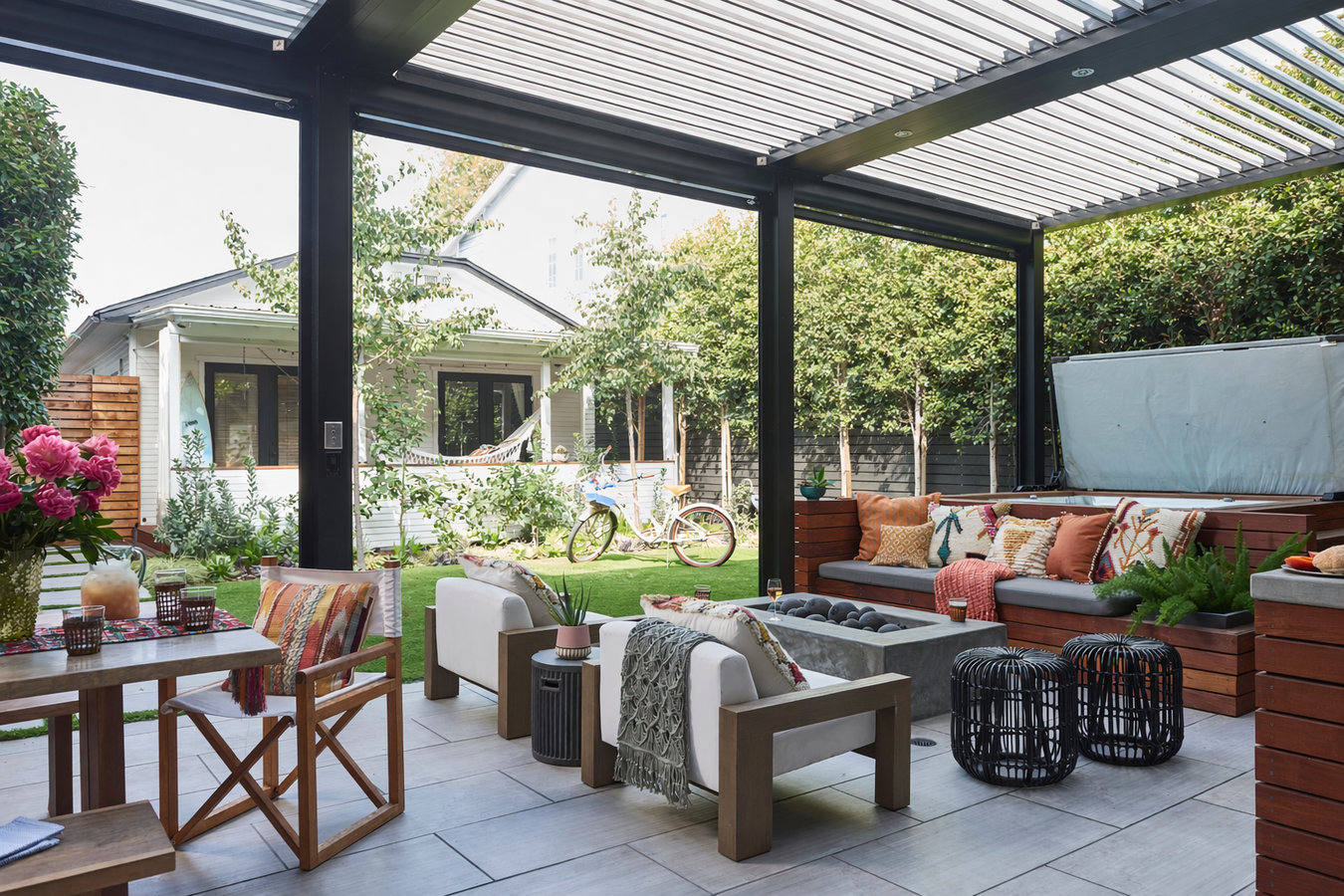
No usable outdoor space? Old patio cracking and pooling water? We build concrete patios on Cambridge's tight city lots - properly drained, freeze-thaw ready, and permitted through the city.
Concrete patio construction in Cambridge, MA means excavating the area, compacting a gravel base, then pouring and finishing a durable outdoor slab - most residential jobs take one to two days of active on-site work, with a full-strength cure taking 28 days.
Cambridge's older housing stock means small lots, limited backyard access, and clay-heavy soils that shift with moisture. Any patio built here needs a properly compacted base, the right concrete mix for freeze-thaw conditions, and a deliberate slope away from the house to keep water moving in the right direction. These are not generic concerns - they are the actual conditions we work with every week in this city.
If you are also considering stamped concrete or adding a concrete pool deck, both can be designed to connect with your patio as one cohesive outdoor surface.
Small surface chips, flaking patches, or a rough pitted texture spreading across your patio are signs that freeze-thaw damage has been building over multiple Cambridge winters. Once the surface starts breaking down this way, patching slows the process but does not stop it. At some point replacement is more cost-effective than repeated repairs.
A properly built patio slopes slightly away from your house so water runs off. If you notice puddles sitting after rain - or worse, water draining toward your foundation - the patio was built without the right slope or has settled unevenly. In Cambridge, spring rain and snowmelt are significant, and standing water near a foundation is a problem worth addressing.
Many Cambridge homes, especially triple-deckers and older single-families on small lots, have backyards that sit unused because there is no defined outdoor living area. If you find yourself avoiding your backyard because there is nowhere comfortable to sit or gather, a concrete patio is the most durable and lowest-maintenance way to create that space.
Small hairline cracks can be sealed. But if you see cracks where one side has risen or dropped relative to the other, creating a lip you can feel underfoot, the slab has moved. This is a tripping hazard. In Cambridge, shifting old fill material or tree roots growing underneath are common causes. Repair is rarely a lasting fix at this stage.
Cambridge Concrete builds residential patios across the Cambridge area, from small backyard slabs behind triple-deckers in East Cambridge to larger outdoor living surfaces on bigger lots in North Cambridge. Every project starts with proper excavation, a compacted gravel sub-base, and a concrete mix specified for Massachusetts freeze-thaw conditions - the base preparation is as important as the pour itself.
Finish options range from standard broom texture - practical, slip-resistant, and durable - to stamped concrete patterns that mimic stone or brick, plus colored and exposed-aggregate finishes. Cambridge is a real estate market where outdoor spaces get noticed, so the finish choice matters for both daily enjoyment and property value. We can also tie your patio into a pool deck if your property has a pool, creating a single connected surface.
We handle the City of Cambridge permit process on your behalf and grade every slab with a deliberate pitch away from the house, so spring snowmelt and heavy rain move where they should rather than toward your foundation.
Practical, slip-resistant, and built to last - the most common choice for Cambridge homeowners who want a durable outdoor surface with minimal maintenance.
Stone, brick, or slate patterns pressed into the surface - suited to homes where outdoor aesthetics matter as much as durability.
Integral pigments or an exposed stone surface add visual texture without sacrificing the structural advantages of concrete.
Cambridge averages around 43 inches of snow per year and sees dozens of freeze-thaw cycles between November and March. This is one of the most demanding patterns for concrete surfaces - water seeps in, freezes, expands, and slowly breaks the surface apart over time. Any contractor you hire here should use air-entrained concrete mixes designed for this climate and recommend sealing the finished patio before the first winter. If they do not bring this up themselves, ask.
Most Cambridge neighborhoods - Cambridgeport, Mid-Cambridge, East Cambridge - were built between the 1870s and 1920s. Lots are small, fences are close, and access to the backyard is often through a narrow side passage or gate. This is the reality we work with every day. We discuss access constraints during every estimate visit and plan accordingly, whether that means using smaller equipment or pumping concrete from the street. Cambridge's soil also includes glacial till and fill material that can shift or settle, which is why base depth and compaction get as much attention as the mix itself.
We serve customers across Somerville, Boston, and Quincy in addition to Cambridge. If your home is in or near a Cambridge historic district - such as parts of Old Cambridge or Avon Hill - the Cambridge Historical Commission may have input on finish materials. We flag this early in the process so it does not become a surprise.
We will respond within 1 business day. Let us know roughly how big the area is, what is currently there, and any access limitations. We schedule a site visit before quoting because conditions vary too much in Cambridge to price accurately over the phone.
We walk the area, check access, review ground conditions, and take measurements. A written, itemized estimate follows within a day or two. Once you approve it, we pull the Cambridge permit on your behalf.
The crew removes existing grass, old paving, or soil, excavates to the right depth, and compacts a gravel base layer. This is the most important step for long-term durability. We do not rush it.
Concrete is poured, leveled, control joints are cut, and your chosen finish is applied. After curing, we walk through the finished project with you and cover sealing and care instructions before the first Cambridge winter.
We respond within 1 business day. There is no obligation - the estimate is free and based on a real site visit at your Cambridge property. Someone from our office will contact you to schedule a time to see the space and put together a written, itemized quote.
(617) 613-7966Cambridge Concrete holds Massachusetts contractor licensing and carries full liability insurance on every project. Your property is protected from day one of the work.
We file permits with Cambridge Inspectional Services on your behalf. The work is inspected and on record with the city, protecting you when you sell your home.
Every patio we build slopes away from your house and uses a concrete mix designed for Massachusetts freeze-thaw conditions. You will not be watching it fall apart after the first hard winter.
We respond to new inquiries within one business day and base every estimate on an actual site visit. A phone quote from a contractor who has not seen your Cambridge backyard is not a real quote.
Every one of these factors is specific to working in Cambridge, and any concrete contractor taking on patio work here needs to account for all of them. The tight lots, the demanding winters, the permit process, the older soil conditions near the Charles River - none of this is generic. The National Ready Mixed Concrete Association and the Portland Cement Association both publish standards for cold-climate concrete work that we apply on every Cambridge job.
Add a decorative stone or brick pattern to your patio surface without giving up the durability of concrete.
Learn moreExtend your outdoor concrete surface around a pool with a slip-resistant, weather-ready deck finish.
Learn moreSpring and summer fill up fast - call us today or submit a request and we will respond within 1 business day with a free, no-obligation estimate.