Concrete floor installation
Level a basement or interior slab as part of the same property-grade project that brought you to retaining walls.
Learn moreServing Cambridge, MA and surrounding areas. (617) 613-7966
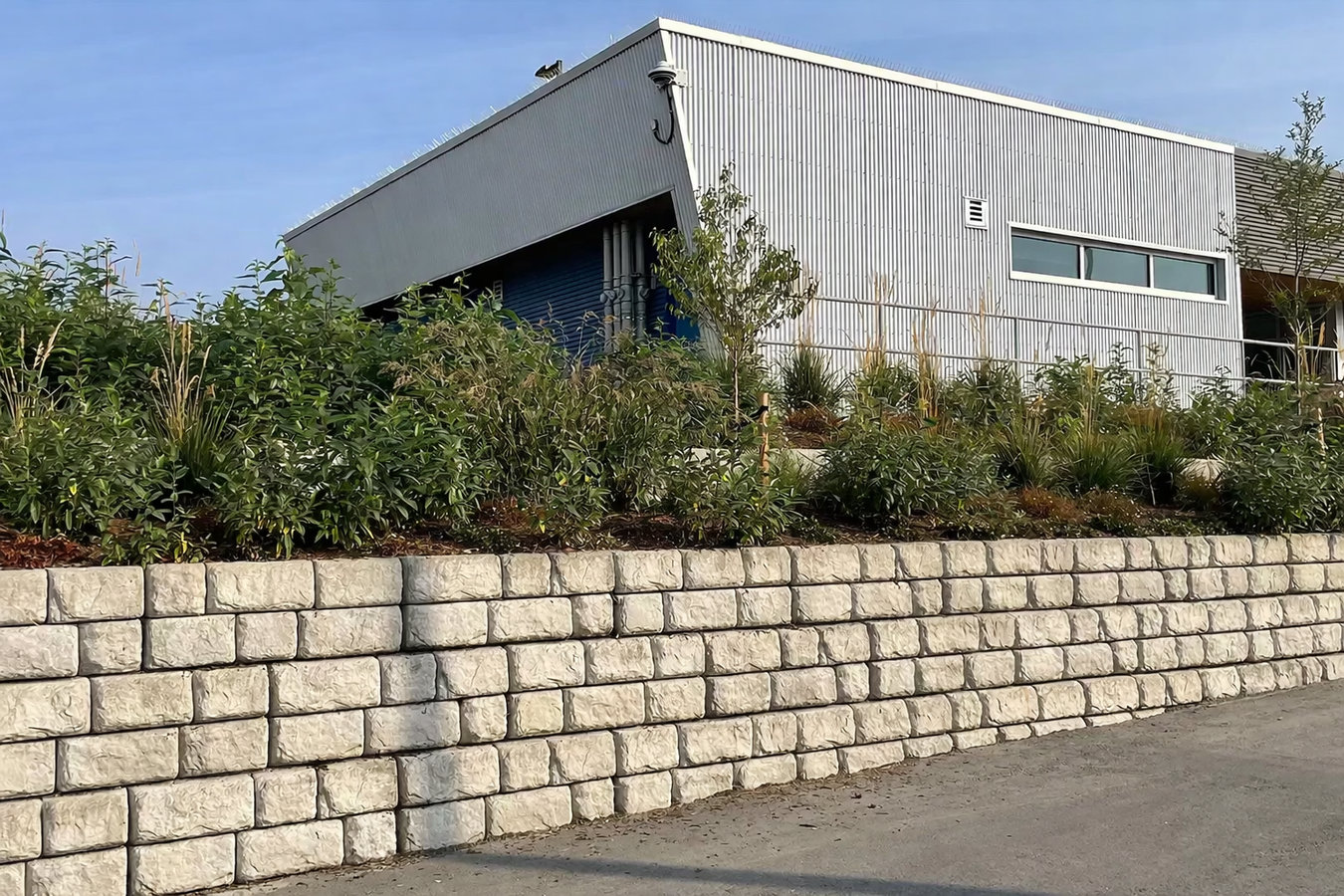
Sloping yard eroding, old wall leaning, or water running toward your foundation? We build concrete retaining walls with deep frost footings and proper drainage - built to hold through Cambridge winters for decades.
Concrete retaining walls in Cambridge, MA hold back soil on sloped lots, protect foundations from runoff, and create usable flat space on grades that would otherwise erode - most residential wall projects take three to seven working days on-site, plus one to three weeks for permit approval before work begins.
Cambridge is one of the most demanding places in Massachusetts to build a retaining wall. The city sits in USDA Hardiness Zone 6b, where the ground experiences dozens of freeze-thaw cycles every winter. Footings must go below the frost line, roughly 48 inches deep, or the wall will shift within a few seasons. Dense urban lots also mean tight equipment access, mature trees with root systems to navigate, and permit requirements that catch homeowners and out-of-area contractors off guard.
If you are reshaping your yard, you may also need concrete floor installation to level an interior space, or concrete footings for a fence or addition that connects to the same project.
After heavy rain you notice bare patches on a slope, soil collecting at the bottom of a hill, or mulch migrating out of garden beds. This is erosion in progress and tends to worsen each season. In Cambridge, where spring rains can be heavy and lots are small, even a modest slope can lose significant soil over a few years without a wall to hold it in place.
A retaining wall that tilts forward or shows a visible bulge in the middle means soil pressure behind it is winning. Cracks wide enough to slip a coin into, or horizontal cracks running across the wall, signal structural movement. Many older Cambridge walls were built without modern drainage and are reaching the end of their useful life.
If water collects against your house after a storm, a poorly graded yard or absent retaining wall may be directing runoff toward your foundation. Over time this causes basement moisture problems or foundation damage. A properly drained retaining wall redirects that water away from your home instead of toward it.
After a hard Cambridge winter you notice a wall section has shifted, a cap stone has popped off, or the base has heaved slightly from the ground. This is a classic sign the original footing was not deep enough to survive repeated freezing and thawing. Have a contractor assess whether the wall can be repaired or needs to be rebuilt from the footing up.
Cambridge Concrete builds poured concrete and concrete block (CMU) retaining walls for residential properties across Cambridge and the surrounding area. Every wall starts the same way: excavation below the frost line, a wide concrete footing, and a gravel-plus-drain-pipe drainage system installed behind the wall before any backfill goes in. Drainage is not optional on any project we take on.
For homeowners whose sloped lots need a complete exterior overhaul, we also offer concrete floor installation for interior spaces and concrete footings for fences, posts, or structures that tie into the retaining wall project. Combining work into one mobilization reduces total cost and limits disruption to your property.
Every Cambridge retaining wall project we take on is permitted before work begins. The Cambridge Inspectional Services Department requires a building permit for walls over four feet, and we handle the filing and coordinate the inspection on your behalf.
Cast-in-place concrete - the strongest option for tall walls or sites where soil pressure is heavy.
Concrete masonry units suited to moderate-height walls on lots where large equipment access is limited.
Honest assessment, targeted repair, or full footing-up reconstruction for existing walls that are leaning or structurally compromised.
Cambridge experiences more freeze-thaw cycles per winter than many other Massachusetts cities. Each time water in the soil freezes it expands and pushes against everything nearby, including your retaining wall. A wall built with a shallow footing or no drainage will start to lean or crack within a few years. Older Cambridge neighborhoods are full of retaining walls originally built without these precautions that are now failing at the footing.
The city's pre-1940 housing stock adds another layer of complexity. Excavation near these properties regularly turns up buried foundations, old utility lines, and tree roots from the city's mature street trees. The Cambridge Urban Forestry Division actively protects the city's tree canopy, and digging near city trees without proper planning can result in fines. We assess tree proximity before we quote and call 811 before any excavation as a matter of course.
We serve homeowners across Cambridge and take on retaining wall projects in neighboring cities as well. Whether your property is in Somerville, Newton, or Lynn, the same freeze-thaw conditions and tight-lot constraints apply, and we plan for them on every job.
We respond within 1 business day. After a brief conversation we visit your property to assess the slope, soil, site access, and any structures nearby. The visit is free and takes 30 to 60 minutes.
You receive a written estimate covering labor, materials, and permit fees. For Cambridge walls over four feet, we file the permit with Inspectional Services on your behalf and keep you updated on approval timing.
We call 811 before any digging so utility lines are marked first. The crew digs below the frost line and pours a wide concrete footing. This is the most disruptive phase; expect noise and excavated soil to be hauled away.
The wall goes up with gravel and perforated drain pipe installed behind it so water moves away rather than building pressure. Soil is backfilled in layers, the site is cleaned up, and we walk through the finished project with you before we leave.
We respond within 1 business day. Site visits are free. Written estimates include permit costs - no surprise line items after you sign.
(617) 613-7966Every wall we build has a footing at least 48 inches deep, below Cambridge's frost line. This is the single biggest factor in whether a wall survives winter. We do not shorten this step to save time.
We manage the Cambridge Inspectional Services Department process from application to sign-off. Your wall is on record before we break ground, protecting you at resale and in any future neighbor dispute.
Gravel backfill and perforated drain pipe go behind every wall we construct, not as an optional add-on but as standard practice. Water that moves through and away from the wall is what keeps it standing for decades.
We have worked on tight Cambridge lots, narrow side yards, and properties adjacent to the city's mature street trees. Site constraints that catch other contractors off guard are part of our normal planning process.
Cambridge Concrete has been building and rebuilding retaining walls on Cambridge lots since 2022, working directly with the city permitting office and navigating the tree protection and underground utility rules that come with dense urban construction. The Massachusetts Construction Supervisor License required for structural work like this is something every homeowner should verify before hiring - and something we carry on every job.
Level a basement or interior slab as part of the same property-grade project that brought you to retaining walls.
Learn moreStandalone footing work for fences, posts, or additions that connect to a retaining wall project on the same site.
Learn moreSpring is the busiest season for concrete work in Cambridge - booking now means your project is scheduled before summer, not pushed into it.